

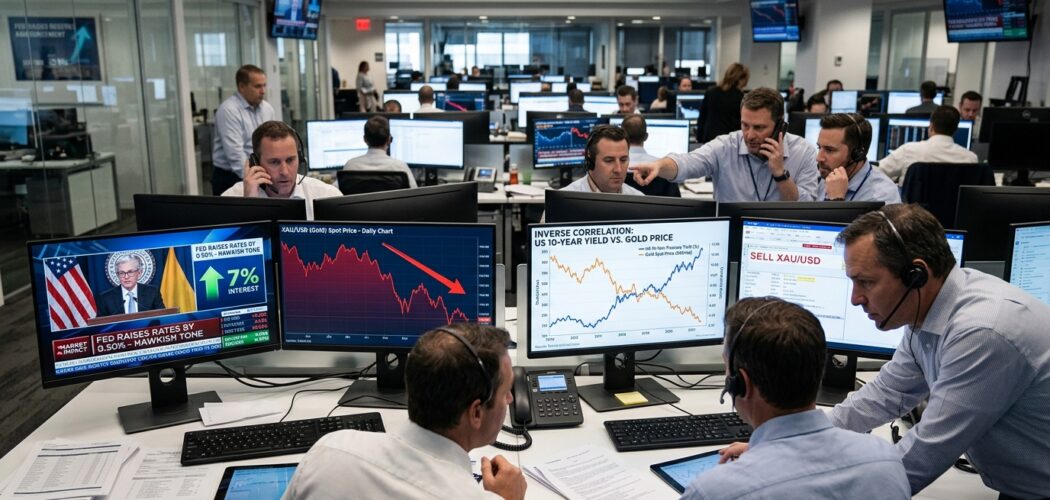
Gold trading is often viewed through the lens of economic data, inflation trends, and interest rates. However, one of the most powerful yet overlooked forces in the market is sentiment. The way investors feel about risk, uncertainty, and future expectations can significantly influence price movements. Understanding market sentiment gold timing gives traders a deeper edge, allowing them to anticipate shifts before they become obvious in price charts.
While technical indicators and fundamentals provide structure, sentiment adds a human layer to market behavior. It reflects fear, confidence, hesitation, and optimism, all of which drive buying and selling decisions. As a result, those who learn to read sentiment effectively can improve their ability to time entries and exits with greater precision.
Understanding The Role Of Market Sentiment
Market sentiment refers to the overall attitude of investors toward a particular asset or financial market. In the context of gold, sentiment often swings between fear-driven demand and confidence-driven neglect. When fear rises, investors tend to flock toward gold as a safe-haven asset. Conversely, when optimism dominates, gold demand may decline.
The concept of market sentiment gold timing becomes especially relevant during periods of economic uncertainty. Investors react not only to current conditions but also to expectations about the future. Because of this, sentiment often leads price action rather than following it. Therefore, understanding these emotional cycles allows traders to act earlier than the broader market.
Additionally, sentiment is rarely static. It changes rapidly in response to news, geopolitical events, and economic indicators. This constant movement creates opportunities for those who know how to interpret it.
Fear And Greed Cycles In Gold Markets
At the core of market sentiment gold timing lies the cycle of fear and greed. These two emotions dominate investor behavior across all markets, but they are particularly visible in gold trading. When fear increases due to economic instability or geopolitical tension, gold demand rises sharply. Investors seek safety, pushing prices higher.
On the other hand, when markets are stable and confidence is high, greed drives investors toward higher-yielding assets. In such conditions, gold often takes a back seat. Prices may stagnate or decline as capital flows into equities or other growth-oriented investments.
Recognizing these emotional extremes is key. When fear peaks, gold prices may already be elevated, making it a risky entry point. Similarly, when greed dominates, gold may be undervalued, offering a potential buying opportunity. This dynamic highlights the importance of mastering market sentiment gold timing rather than reacting emotionally.
Leading Indicators Of Market Sentiment
Several indicators can help investors measure sentiment and improve their approach to market sentiment gold timing. While no single indicator is perfect, combining multiple signals creates a clearer picture.
Volatility indexes, such as the VIX, often reflect fear levels in the broader market. When volatility rises, gold demand tends to increase. Similarly, bond yields and currency movements can provide insight into investor confidence.
News headlines and media tone also play a role. Negative headlines can amplify fear, while positive coverage can boost confidence. Social media trends, although less traditional, have become increasingly influential in shaping sentiment.
By analyzing these indicators together, investors can better understand the emotional state of the market. This insight allows them to align their strategies with prevailing sentiment rather than opposing it blindly.
Contrarian Strategies And Sentiment Extremes
One of the most effective ways to apply market sentiment gold timing is through contrarian strategies. These strategies involve going against the crowd when sentiment reaches extreme levels. While this approach requires confidence and discipline, it can lead to strong results.
When sentiment is overly bearish, many investors may have already sold their positions. This creates an opportunity for contrarian buyers to enter at lower prices. Conversely, when sentiment is overly bullish, prices may be inflated, making it a potential time to sell.
However, timing is critical. Acting too early can lead to losses if sentiment continues to push prices in the same direction. Therefore, combining sentiment analysis with technical confirmation improves the effectiveness of this approach.
Short-Term Trading Versus Long-Term Positioning
Market sentiment gold timing affects both short-term traders and long-term investors, but the impact differs. Short-term traders rely heavily on sentiment shifts to capture quick price movements. They monitor news, volatility, and market reactions closely.
Long-term investors, on the other hand, use sentiment as a secondary factor. They focus more on macroeconomic trends but still pay attention to sentiment for better entry points. For instance, they may choose to buy gold during periods of low enthusiasm, when prices are more favorable.
Balancing these perspectives allows investors to build a more flexible strategy. While short-term moves offer opportunities, long-term positioning provides stability.
The Influence Of Global Events On Sentiment
Global events play a significant role in shaping market sentiment gold timing. Political instability, economic crises, and unexpected events can quickly shift investor behavior. These changes often happen before markets fully adjust, creating early opportunities.
For example, during geopolitical tensions, gold demand typically rises as investors seek safety. Similarly, during financial crises, sentiment can shift rapidly toward caution, driving gold prices higher.
However, once the situation stabilizes, sentiment may reverse. Prices can decline as confidence returns. Understanding this pattern helps investors anticipate not only the initial reaction but also the eventual correction.
Combining Sentiment With Technical Analysis
While sentiment provides valuable insight, it should not be used alone. Combining it with technical analysis strengthens decision-making. This approach enhances market sentiment gold timing by adding structure to emotional signals.
For instance, if sentiment indicates fear and technical indicators show oversold conditions, the probability of a price rebound increases. Similarly, if sentiment is overly optimistic and technical indicators signal overbought conditions, a correction may be likely.
This combination reduces uncertainty and improves accuracy. It allows investors to confirm their ideas before committing to a trade.
Avoiding Common Sentiment-Based Mistakes
Despite its usefulness, relying on sentiment alone can lead to mistakes. One common error is following the crowd without analysis. When investors act purely on emotion, they often buy at peaks and sell at lows.
Another mistake involves ignoring broader market conditions. While sentiment is powerful, it must be considered alongside economic data and trends. Failing to do so can result in incomplete analysis.
To improve market sentiment gold timing, investors should remain disciplined and objective. Setting clear rules and sticking to them helps reduce emotional bias.
Building A Strategy Around Sentiment
Creating a strategy based on market sentiment gold timing requires consistency and patience. Investors should define clear criteria for identifying sentiment extremes and combine them with technical and fundamental signals.
Regularly reviewing market conditions also helps refine the strategy. Over time, patterns become more recognizable, making it easier to act confidently.
Additionally, risk management is essential. Even the best strategies can fail in unpredictable markets. Using stop-loss orders and position sizing helps protect capital while pursuing opportunities.
Conclusion
Understanding market sentiment gold timing offers a powerful advantage in gold trading. By recognizing how emotions drive market behavior, investors can anticipate price movements and make more informed decisions. While sentiment alone is not enough, combining it with technical and fundamental analysis creates a well-rounded approach.
Ultimately, gold trading is as much about psychology as it is about data. Those who learn to interpret both aspects can navigate market cycles with greater confidence. By staying disciplined and aware, investors can use sentiment to improve timing, reduce risk, and enhance overall performance.
FAQ
1. What is market sentiment in gold trading?
Market sentiment reflects how investors feel about gold, influencing buying and selling decisions.
2. How can I measure investor sentiment?
You can use indicators like volatility indexes, news trends, and market behavior to gauge sentiment.
3. Why does gold rise during uncertainty?
Gold is seen as a safe-haven asset, so demand increases when investors seek stability.
4. Can sentiment predict gold price movements?
Sentiment can provide early signals, but it works best when combined with other analysis methods.
5. Should beginners rely on sentiment for trading decisions?
Beginners should use sentiment alongside technical and fundamental analysis for better results.