

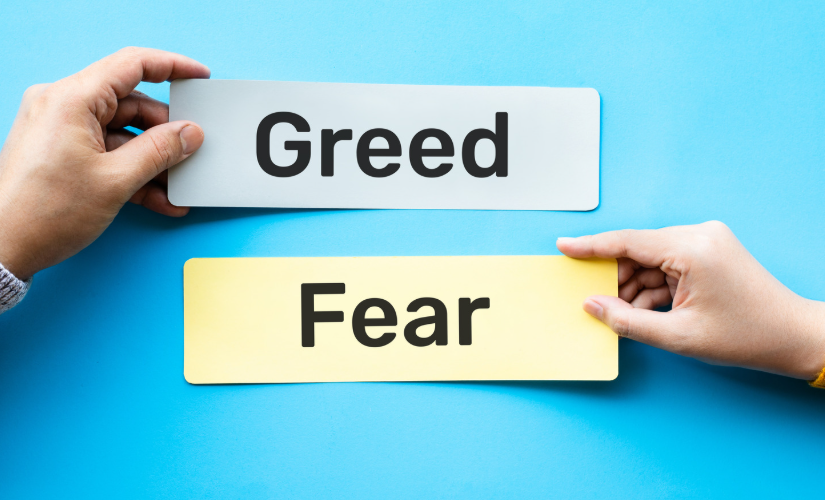
Behavioral finance trading helps explain why smart people still make emotional mistakes in the market. Many traders know they should follow a plan, manage risk, and avoid impulsive decisions. However, fear and greed often become stronger than logic when real money is on the line. A trader may panic during a sudden drop, chase a fast rally, double down after a loss, or ignore a stop-loss because hope feels easier than discipline. These reactions are common, yet they can damage performance if they become habits.
Trading is not only about charts, news, earnings, inflation data, or technical indicators. It is also about behavior. A trader can have a strong strategy and still lose money if emotions control execution. Likewise, a simple strategy can work better when the trader follows it with patience and consistency. That is why understanding your mind matters as much as understanding the market.
Fear and greed are powerful because they speak to survival and reward. Fear wants safety now. Greed wants more profit now. Both emotions can be useful in small amounts, but they become dangerous when they take over decision-making. Fear can protect you from reckless risk, yet it can also make you exit good trades too early. Greed can motivate action, but it can also make you overtrade, oversize positions, or chase prices after the best entry has passed.
For more background, you can read our internal guide on risk management for traders or our beginner article on trading psychology basics. For outside learning, resources from Investor.gov and FINRA can help traders understand investing risks, fraud warnings, and smarter decision-making.
Why Behavioral Finance Trading Matters
Behavioral finance trading matters because markets are driven by people, institutions, expectations, and emotion. Prices do not move only because of facts. They also move because traders react to those facts. A company may report strong earnings, yet the stock can fall if expectations were too high. A market may drop on bad news, then recover when traders believe the worst has passed. Therefore, price movement often reflects psychology as much as information.
Retail traders face a special challenge because they usually trade with personal money. A loss may feel like a personal failure. A win may create overconfidence. A missed opportunity may trigger regret. As a result, traders can begin making decisions based on emotional relief instead of market evidence.
This is where behavioral finance becomes practical. It helps traders understand common patterns, such as loss aversion, herd behavior, confirmation bias, overconfidence, anchoring, and recency bias. These patterns can quietly shape decisions. Once you recognize them, you can build rules that reduce their influence.
For example, loss aversion means losses often feel more painful than gains feel rewarding. Because of this, a trader may hold a losing position too long just to avoid realizing the loss. Meanwhile, the same trader may sell a winning trade too early because they want to protect a small gain. Over time, that behavior can create a poor pattern: small wins and large losses.
How Fear Changes Trading Decisions
Fear usually appears when uncertainty feels high. A trader may fear losing money, being wrong, missing rent, disappointing others, or giving back recent gains. During volatile markets, fear can rise quickly because prices move faster than expected. When this happens, the brain often looks for immediate safety.
One common fear-based mistake is panic selling. A trader enters a position with a clear plan, but a sudden drop creates stress. Instead of checking whether the original trade idea is still valid, the trader exits immediately. Sometimes that exit protects capital. However, it can also happen near the worst moment, right before the market recovers.
Another fear response is freezing. A trader may see a valid setup but hesitate because the last trade lost money. By the time confidence returns, the opportunity has passed. This creates frustration, which can lead to revenge trading later. In that way, fear can cause both inaction and reckless action.
Fear can also make traders avoid risk completely. While caution is useful, total avoidance can prevent learning and growth. No trader can remove risk entirely. The goal is to define risk, size it properly, and accept that some trades will fail. When losses are planned, they become part of the process rather than a shock.
Behavioral finance trading helps traders see fear as information, not an order. If fear appears, pause and ask what it is telling you. Are you trading too large? Did you enter without a plan? Is the market moving against your setup? Or are you reacting to normal volatility? These questions turn emotion into analysis.
Use Rules to Reduce Panic
Rules are useful because they protect you when emotions rise. A stop-loss, position size limit, and maximum daily loss can reduce fear before the trade even begins. When you know how much you can lose, the trade becomes easier to manage.
A written plan also helps. Before entering, write down the entry reason, stop level, target area, and invalidation point. If the trade moves against you, review the plan before acting. This does not guarantee a profit, but it can prevent rushed decisions.
Traders should also avoid oversized positions. Many emotional mistakes begin with risking too much. Even a small market move can feel unbearable when the position is too large. Smaller positions give you room to think clearly.
How Greed Pushes Traders Into Risk
Greed often appears after wins, strong market rallies, or stories about other people making fast money. It can make a trader believe they must act now or miss out forever. This fear of missing out can be especially strong in stocks, crypto, commodities, options, and fast-moving markets.
A greedy trader may increase position size after a few wins. Confidence rises, and the trader begins to feel unusually skilled. However, markets can change quickly. A position that is too large can erase several good trades in one bad move.
Greed also encourages chasing. A stock breaks out, a commodity rallies, or a currency pair moves sharply. Instead of waiting for a better setup, the trader enters late because the move looks exciting. Late entries often carry poor risk-to-reward because the stop must be wide while the upside may already be reduced.
Another greed-driven mistake is refusing to take profits. A trader reaches the target but decides to wait for more. Sometimes that works. Yet if there is no updated plan, the decision may come from desire rather than analysis. The trade can reverse, and a solid gain can disappear.
Behavioral finance trading shows that greed often hides inside confidence. The trader may believe they are being bold or strategic, when they are actually reacting to excitement. This is why a trading journal matters. It helps reveal whether decisions came from a plan or an emotional urge.
Create Profit Rules Before You Need Them
Profit rules can reduce greed. Decide in advance where you may take partial profits, trail a stop, or close the trade. This helps you avoid changing your plan just because the position is green.
Risk-to-reward planning also matters. If you risk $100 to make $150, the trade may not offer enough reward for the risk. If you risk $100 to make $300, the setup may be more attractive. Clear expectations make it easier to avoid random exits.
A profit plan should still allow flexibility. Markets can trend farther than expected. However, flexibility should come from evidence, not emotion. If momentum strengthens, adjust with a rule. If the only reason to hold is “I want more,” greed may be leading.
Common Biases That Hurt Traders
Biases are mental shortcuts. They help people make fast decisions, but they can create trading mistakes. One of the most common is confirmation bias. This happens when traders look only for information that supports what they already believe. If they are bullish, they ignore bearish signals. If they are bearish, they dismiss strength.
Anchoring is another problem. A trader may fixate on a past price, such as the level where they bought, the previous high, or a target mentioned online. Because of that anchor, they may ignore fresh market information. The market does not care where you entered. It only reflects current supply, demand, and expectations.
Recency bias can also distort decisions. If the last few trades were winners, a trader may expect more wins. After several losses, the same trader may expect every setup to fail. In both cases, recent experience feels more important than the full strategy.
Herd behavior is especially dangerous in fast markets. When everyone seems excited, buying can feel safe. When everyone seems afraid, selling can feel logical. However, crowded trades can reverse sharply. Following the crowd without your own plan often leads to poor timing.
Overconfidence may be the most costly bias. A trader who wins early may believe they have mastered the market. They may stop reviewing trades, ignore risk limits, or increase size too quickly. Then one unexpected move exposes the weakness in their process.
Behavioral finance trading helps identify these patterns before they become expensive. The goal is not to remove every bias. That is unrealistic. Instead, traders need systems that slow them down, challenge assumptions, and keep risk controlled.
Ask Better Questions Before Each Trade
Before entering, ask what would prove your idea wrong. This question fights confirmation bias. If you cannot name an invalidation point, the trade may be based on hope.
Next, ask whether you are reacting to the crowd. Did you find the setup through your own process, or did urgency come from social media? If the trade only feels attractive because everyone is talking about it, slow down.
Finally, ask whether the position size matches your plan. A good trade can become a bad decision if the size is too large. Risk control should come before excitement.
Build a Trading Plan That Controls Emotion
A trading plan gives structure to uncertain decisions. It should explain what you trade, when you trade, why you enter, how much you risk, where you exit, and when you stop for the day. Without these rules, every market move becomes a fresh emotional test.
Start with market selection. Some traders focus on stocks, while others trade forex, commodities, options, or crypto. Each market has different hours, volatility, costs, and risks. Choosing too many markets can create overload. A narrower focus often improves learning.
Next, define your setup. A setup might involve support and resistance, trend continuation, moving averages, breakouts, pullbacks, or fundamental catalysts. Whatever method you choose, it should be clear enough to repeat. If you cannot describe your setup simply, you may struggle to follow it under pressure.
Position sizing must be part of the plan. Many traders decide size based on confidence, but confidence can be unreliable. A better approach is to risk a set percentage or fixed amount per trade. This makes losses more manageable and prevents one trade from causing major damage.
Behavioral finance trading becomes more practical when exits are planned before entries. Decide where the trade is wrong. Then decide where profit-taking makes sense. If you wait until emotions are high, the decision becomes harder.
A maximum loss rule can also protect your account. For example, a trader may stop after losing a set amount in one day or after three losing trades. This rule prevents frustration from turning into revenge trading. Stopping is not weakness. It is risk management.
Review Trades Without Self-Attack
A trading journal is one of the best tools for emotional discipline. Record the setup, entry, exit, result, emotion, and lesson. Over time, patterns become clear. You may discover that you lose more when trading news, entering late, or increasing size after wins.
Review should be honest but not harsh. Shame can make traders avoid learning. Instead, treat each trade as data. A losing trade can still be a good trade if you followed the plan. A winning trade can still be a bad trade if you took reckless risk.
The best traders focus on process. Results matter, but one result does not define skill. Good process repeated over time gives you a better chance of consistency.
Train Your Mind for Better Market Decisions
Emotional control is a skill. It improves with practice, reflection, and structure. Traders should not expect to feel calm all the time. Markets can be stressful. The goal is to act well even when emotions appear.
One useful habit is a pre-trade pause. Before entering, take a short breath and review the setup. Ask whether the trade matches your rules. This small pause can interrupt impulsive action.
Another helpful habit is reducing screen time. Watching every tick can make normal movement feel dramatic. If your trade is based on a longer time frame, constant checking may increase stress. Set alerts instead of staring at the chart.
Sleep, exercise, and stress management also matter. Tired traders make weaker decisions. Stress can reduce patience and increase impulsive behavior. While these habits may seem unrelated to trading, they affect judgment.
Behavioral finance trading also teaches humility. No trader controls the market. Even the best setup can fail. Accepting uncertainty makes losses easier to handle. It also reduces the need to be right all the time.
Detachment is another important skill. A trade is not a reflection of your intelligence or worth. It is a decision made under uncertainty. When traders attach identity to outcomes, they often defend bad positions. When they view trades as probabilities, they can exit more cleanly.
Use Environment to Support Discipline
Your trading environment can either help or hurt your behavior. If your workspace is full of distractions, alerts, social media, and chat rooms, emotional reactions may increase. A calmer setup supports better decisions.
Choose a routine before the market opens. Review major news, mark key levels, define possible setups, and decide your risk limit. Once the session begins, follow the plan instead of improvising every few minutes.
After the session, step away before reviewing. Emotional distance can make analysis clearer. This routine helps separate trading from constant stress.
Conclusion
Fear and greed are part of trading because markets involve uncertainty, risk, and real money. Fear can make traders exit too early, freeze, or avoid good setups. Greed can make them chase, oversize positions, and ignore profit rules. These emotions are normal, but they should not control the trading process.
The value of behavioral finance trading is that it turns emotional patterns into something you can observe and manage. By understanding biases, writing clear rules, using stop-losses, managing position size, and reviewing trades honestly, traders can reduce costly mistakes. They may not remove emotion completely, but they can stop emotion from making every decision.
Better trading starts with better self-awareness. The market will always create pressure. Prices will move fast, headlines will shift, and other traders will share loud opinions. However, your job is to follow a process that protects your capital and supports clear thinking. With discipline, patience, and a strong plan, fear and greed can become signals to manage rather than forces that control your trades.
FAQ
1. Why Do Fear and Greed Affect Traders So Much?
Fear and greed affect traders because money decisions trigger strong emotions. Fear seeks safety, while greed seeks reward. Both can lead to poor choices when traders lack clear rules.
2. How Can Traders Control Emotional Decisions?
Traders can control emotional decisions by using a written plan, limiting position size, setting stop-loss levels, and reviewing trades. A short pause before entering can also reduce impulse trades.
3. What Is Loss Aversion in Trading?
Loss aversion means losses often feel more painful than gains feel rewarding. Because of this, traders may hold losing positions too long or sell winning trades too early.
4. Why Is a Trading Journal Important?
A trading journal helps traders spot emotional patterns and repeated mistakes. It also shows whether results come from a solid process or random decisions.
5. Can Trading Psychology Improve Over Time?
Yes, trading psychology can improve with practice. Clear rules, smaller risk, regular review, and better routines can help traders make calmer decisions over time.