

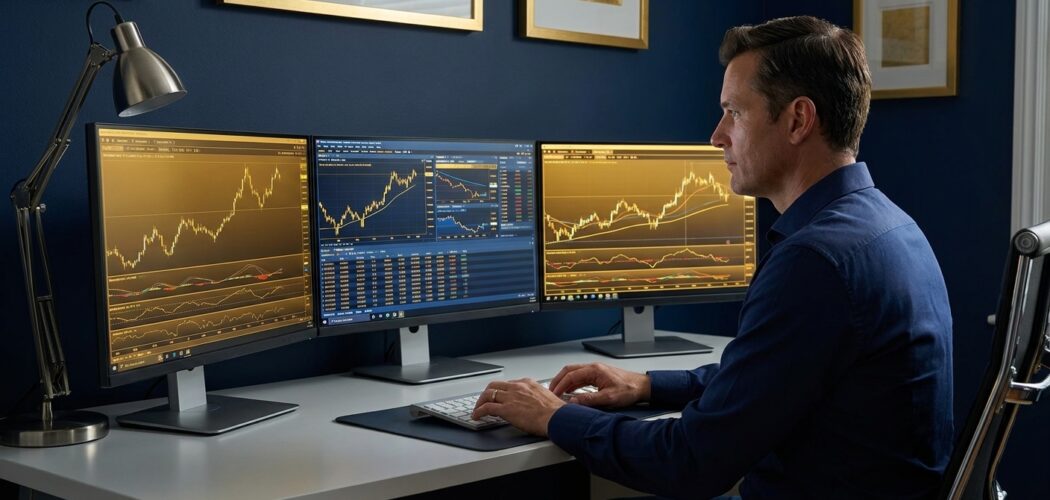
Smart moves volatile market planning is essential for retail investors who want to trade gold without reacting emotionally to every price swing. Gold can rise quickly during inflation fears, currency weakness, or geopolitical stress, yet it can also reverse sharply when the U.S. dollar strengthens or interest rate expectations change. Because of that, retail traders need a clear strategy before entering the market. Instead of chasing headlines, they should focus on risk control, better timing, and a disciplined process that supports confident decisions.
Gold has long been viewed as a store of value, but trading gold is different from simply owning it for the long term. A long-term investor may hold gold as part of a broader portfolio, while an active trader must manage entries, exits, and position size with more precision. This difference matters because volatile markets can punish rushed decisions. When prices move fast, a trader without a plan may buy too late, sell too early, or hold a losing position for too long.
Gold often attracts attention when investors feel uncertain about stocks, inflation, central banks, or global events. However, gold does not move higher during every crisis. Sometimes investors sell gold to raise cash, while other times the dollar or bond yields become more attractive. Therefore, smart moves volatile market decisions should combine technical signals with broader market awareness.
For more background on related market risk planning, read our internal guide on commodity trading risk management. You can also review our beginner-friendly guide to gold investing basics if you want a stronger foundation before trading actively.
Why Smart Moves Volatile Market Planning Matters
Smart moves volatile market planning matters because gold can move before many retail investors understand why. Prices often react to expectations, not just confirmed news. For example, gold may rise before a central bank meeting if traders expect lower future rates. It may also fall after weak economic data if the market had already priced in worse conditions. This is why retail investors should avoid assuming that one headline tells the whole story.
The U.S. dollar is one of the most important forces behind gold prices. Since gold is usually priced in dollars, a stronger dollar can make gold more expensive for overseas buyers. As a result, demand may weaken. On the other hand, a softer dollar can support gold because it improves affordability across global markets. This relationship does not work perfectly every time, but it gives traders useful context.
Interest rates also matter. Gold does not pay interest, so it often competes with cash, bonds, and other income-producing assets. When real yields rise, some investors may prefer bonds. However, when inflation remains sticky or rate expectations fall, gold can become more attractive. Retail traders should watch these forces instead of relying only on price charts.
The World Gold Council market commentary provides regular gold market research, while the CME Group gold futures overview explains how gold futures support price discovery and diversification. These are useful outbound resources for investors who want to understand gold beyond daily headlines.
A strong gold strategy begins with the reason for the trade. A trader may buy because gold is breaking above resistance, bouncing from support, or reacting to a weaker dollar. However, “gold is going up” is not a complete reason. A good trade needs a setup, a stop-loss level, a target, and a clear risk limit.
Smart moves volatile trading requires patience. If gold is moving sideways before a major inflation report or central bank decision, waiting may be safer than guessing. False breakouts often happen before major news. Therefore, retail investors should let the market confirm direction instead of forcing trades.
Position sizing is another key part of the plan. Even a strong setup can fail, so traders should decide how much they are willing to lose before entering. Many disciplined traders risk only a small percentage of their account on each trade. This approach helps protect capital during losing streaks and keeps emotions under control.
Stop-loss placement should match the trade idea. If a trader buys near support, the stop may sit below that support zone. If price breaks that level, the reason for the trade may no longer be valid. However, stops should not be placed so close that normal volatility triggers them too easily. Gold often needs room to move.
Profit targets are just as important. Some traders take partial profits near the first target and let the rest of the position run. This method can reduce pressure while still allowing gains if gold continues higher. It also helps traders avoid the common mistake of turning a winning trade into a losing one.
Smart moves volatile market strategies should also match the trading vehicle. Retail investors can access gold through physical bullion, gold ETFs, futures, options, mining stocks, or contracts for difference. Each option carries different risks. Physical gold may suit long-term storage, while ETFs can offer easier buying and selling. Futures and leveraged products require more experience because losses can grow quickly.
Mining stocks are not the same as gold. Although they often move with gold prices, they also depend on company costs, debt, production, management, and regional risks. A miner can underperform even when gold prices rise. Therefore, investors should research each product before assuming it gives pure gold exposure.
Technical analysis can help retail traders time decisions, but it should not become overly complicated. Support and resistance are often enough to create structure. If gold repeatedly bounces from an area, that zone may act as support. If it struggles near a price level, that zone may act as resistance. These levels help traders plan entries and exits with more discipline.
Moving averages can also help identify trend direction. When gold trades above a rising long-term moving average, the broader trend may remain constructive. If it falls below major moving averages and fails to recover, caution may be wise. However, moving averages lag price, so they should confirm a view rather than replace judgment.
Momentum indicators can add another layer. If gold breaks resistance while momentum improves, the move may have stronger follow-through. If price rises while momentum weakens, the rally may be losing strength. This does not guarantee a reversal, but it encourages better risk management.
Smart moves volatile market trading becomes stronger when technical signals match macro conditions. A gold breakout may carry more weight if the dollar is weakening and rate expectations are falling. In contrast, the same breakout may deserve caution if the dollar is rising sharply. Traders should look for alignment instead of relying on one signal.
Risk management separates disciplined trading from gambling. Gold can move sharply after inflation data, employment reports, central bank speeches, or geopolitical news. Because of that, traders should reduce oversized exposure before major announcements. Sometimes the smartest trade is no trade at all.
Retail investors should also avoid overtrading. Gold can move often, which tempts traders into constant action. However, more trades do not always mean more profit. In many cases, frequent low-quality trades create unnecessary losses and extra costs. A better approach is to wait for higher-quality setups.
Leverage deserves special caution. Leveraged gold products can magnify gains, but they also magnify losses. During volatile periods, even a small move can create a large account swing. Beginners should avoid aggressive leverage until they fully understand the risks.
Smart moves volatile gold trading also requires emotional control. Fear can push traders to sell too early, while greed can make them hold too long. A written trading plan helps reduce this pressure. It gives the trader rules to follow when the market becomes noisy.
A trading journal can improve results over time. After each trade, record the entry reason, stop level, target, market conditions, and emotional state. Over time, patterns become clear. A trader may discover they perform better with swing trades than day trades, or that they lose money when trading during major news events.
One common mistake is buying gold only after a major rally. By the time headlines become loud, the move may already be crowded. Late buyers can suffer if prices pull back. Instead, traders should look for planned entries near support, breakouts with confirmation, or pullbacks within a broader trend.
Another mistake is treating gold as a guaranteed hedge. Gold can help during some uncertain periods, but it does not protect against every risk. Sometimes gold and stocks fall together when investors need cash. Therefore, gold should be part of a broader plan, not the entire plan.
Retail investors should also avoid moving stop-loss levels after entering a losing trade. A stop should mark the point where the trade idea no longer works. Moving it farther away because the loss feels uncomfortable can turn a small planned loss into a much larger one.
Smart moves volatile market success does not require predicting every price move. Instead, it requires a repeatable process. Traders need to understand the market backdrop, choose sensible entries, manage risk, and accept that some trades will fail. The goal is not perfection. The goal is consistency.
Gold can offer strong opportunities during uncertain markets, but it rewards preparation more than impulse. Retail investors who combine simple technical tools, macro awareness, controlled position sizing, and emotional discipline can make better decisions. With smart moves volatile market planning, gold trading becomes less about reacting to fear and more about following a clear strategy.
FAQ
1. Why Does Gold Move So Much During Uncertain Markets?
Gold often reacts to inflation concerns, currency weakness, interest rate expectations, and global risk. However, it does not always rise during uncertainty, so traders should use a plan instead of relying on assumptions.
2. Is Gold Better for Trading or Long-Term Investing?
Gold can work for both, but the strategy must match the goal. Long-term investors may focus on allocation, while traders need clear entries, exits, and risk controls.
3. What Is the Safest Way for Beginners to Trade Gold?
Beginners may prefer small positions, gold ETFs, and simple risk rules. They should avoid heavy leverage and learn how gold reacts to the dollar, rates, and major economic data.
4. Should Retail Investors Use Stop-Loss Orders on Gold Trades?
Yes, stop-loss orders can help limit losses when the market moves against the trade. The stop should match the setup and sit where the original trade idea becomes invalid.
5. How Can Traders Avoid Emotional Gold Trading Decisions?
A written plan, position limits, stop-loss rules, and a trading journal can reduce emotional decisions. Patience also helps because not every gold price move creates a good trade.